Saturday, February 18, 2012
The Simple Pioneer
If you get a chance, check out The Simple Pioneer. This blog has tips on making beer, wine and cheese along with gardening tips that you can use to make beer and wine.
Sunday, December 04, 2011
Black Tea Wine
* 4 tablespoons bulk black tea
* 1 11-oz can frozen red or white grape concentrate, depending on desired color
* 2 lbs sugar
* 2 tsp citric acid
* 6 pts water
* 1 tsp yeast nutrient
* 1 pkt wine yeast
Bring water to a boil and pour over the tea and sugar, stir well, and infuse until cool. Strain into primary, add grape concentrate, acid, nutrient and yeast. Cover and ferment until s.g. drops below 1.020. Transfer to secondary, fit airlock and ferment to dryness. Rack when wine is clear and completely dry, top up and refit airlock. Rack again after 45 days, stabilize, refit airlock, and set aside for 3-4 weeks. Sweeten to taste if desired and bottle.
Source: Jack Keller
Wednesday, March 02, 2011
Dried Apricot Wine
Photo by: Itinerant Tightwad
6 lb. dried apricots,
2 oranges,
3 ½ lb. sugar,
9 pts water,
1 oz. Yeast,
1 tablespoonful of freshly made tea.
Put the apricots in the fermenting vessel with the cut-up oranges and their peel. Fold the orange peel and squeeze to get as much oil out of it as you can.
Boil two pounds sugar in seven pints water for two minutes and pour over the fruits while still boiling. Allow to cool and add the yeast.
Cover as directed and ferment for ten days, crushing by hand each day and covering again at once.
After ten days, strain and wring out as dry as you can and put the strained liquor in the gallon jar. Boil the remaining sugar in the last two pints of water for two minutes and when cool add to the rest, and then add the tea.
Cover as directed or fit fermentation lock and leave until all fermentation has ceased.
Put the apricots in the fermenting vessel with the cut-up oranges and their peel. Fold the orange peel and squeeze to get as much oil out of it as you can.
Boil two pounds sugar in seven pints water for two minutes and pour over the fruits while still boiling. Allow to cool and add the yeast.
Cover as directed and ferment for ten days, crushing by hand each day and covering again at once.
After ten days, strain and wring out as dry as you can and put the strained liquor in the gallon jar. Boil the remaining sugar in the last two pints of water for two minutes and when cool add to the rest, and then add the tea.
Cover as directed or fit fermentation lock and leave until all fermentation has ceased.
Saturday, February 05, 2011
Clementine Wine
photo by: Free Wine
1 gallon water
24 Clementines
10 Valencia oranges
1 lb extra fine granulated sugar
1 teaspoon citric acid
1 teaspoon pectic enzyme
¼ teaspoon tannin
1 teaspoon yeast nutrient
1 package Champagne wine yeast
24 Clementines
10 Valencia oranges
1 lb extra fine granulated sugar
1 teaspoon citric acid
1 teaspoon pectic enzyme
¼ teaspoon tannin
1 teaspoon yeast nutrient
1 package Champagne wine yeast
Mix sugar and water in large pot. Bring to boil.
Peel all Clementines and Valencias and save the zest from 10 of the Clementines.
Section the fruit and remove any pith. Place zest and sections in a nylon mesh straining bag. Close bag with a tie and mash fruit in a primary fermentation container.
Pour boiling sugar water over fruit and stir. Let liquid cool until room temperature. Add citric acid, pectic enzyme, tannin, and yeast nutrient to container. Cover and let sit for 12 hours.
Remove cover, add activated Champagne wine yeast, and cover again. Stir daily for 10 days.
Remove bag from container and pour liquid into secondary fermentation container. Seal with airtight lock lid and ferment.
Skim froth, as necessary. When froth ceases to form, rack and place into bottles. Rack again every two months for one year.
Monday, January 03, 2011
Cinnamon Wine
Photo by: S. Diddy
* 12 six-inch cinnamon sticks
* 3 lbs granulated sugar
* 7-1/2 pts water
* 1 tsp yeast nutrient
* 1/8 tsp tannin
* 3 tsp acid blend
* 1 crushed Campden tablet
* Champagne wine yeast
Put cinnamon sticks and one quart water in a pot with a tight-fitting lid. Bring to a simmer and hold for 10 minutes with the lid on, turn off heat, and let steep for two hours. Strain the water into a secondary and discard the cinnamon sticks. Add sugar to remaining water and bring to a boil. Turn off heat and stir until sugar is dissolved. Add all remaining ingredients to secondary except Campden and yeast and then pour in the sugar-water. Cover with a napkin held in place with a rubberband and allow to cool. Add Crushed Campden, stir, and allow to sit 24 hours covered. Add activated yeast and recover. Ferment 5-7 days, or until specific gravity falls below 1.030. Fit with airlock and continue fermentation 30 days. Rack into sanitized secondary, top up, and refit airlock. Ferment another 3 months, rack again and ferment additional 3 months. Stabilize, sweeten to taste, and let sit under airlock additional 10 days. Rack into bottles and store in dark place. [Adapted from Terry Garey's The Joy of Home Winemaking]
Source: Jack Keller
Tuesday, November 02, 2010
Corn Wine
* 2 lbs cracked corn
* 1 lb chopped golden raisins
* 3 lbs granulated sugar
* 4 tsp acid blend
* 1 tsp yeast nutrient
* 1/2 tsp tannin
* water to one gallon
* 1 crushed Campden tablet
* Champagne or Sherry wine yeast
Rinse the corn well, checking for any pebbles or other foreign matter.
Put chopped raisins and corn in a bowl and cover with enough water to cover the corn. Soak overnight. The next day, pour corn and raisins in a fine nylon straining bag, tie the bag closed, and put in primary.
Pour the soaking water into primary. Put remaining water on to boil with sugar in it. Stir well as water heats up until sugar is dissolved and water comes to a boil. Pour water into primary.
Add the acid blend, yeast nutrient and tannin. Cover primary with a sheet of plastic held in place with a large rubber band or loop of elastic. When cooled to room temperature, add crushed Campden tablet, recover, and set aside for 24 hours.
Meanwhile, boil a cup of orange juice, transfer to a sterilized pint jar and set in refrigerator 30 minutes to cool. When cool, add yeast to orange juice and cover with plastic wrap. After 24 hours, add orange juice to primary.
Stir daily for two weeks. Remove bag of corn/raisins and allow to drip drain (do not squeeze). Discard corn/raisins, recover primary and allow liquor to settle overnight.
Rack into secondary and fit with airlock. Rack every two months for six months. After sixth-month racking, check for dryness. If not completely dry (specific gravity of 0.990), allow another two months and rack again. When dry, bottle the wine. May drink immediately. [Adapted from Terry Garey's The Joy of Home Winemaking]
Source: Jack Keller
Picture by: Normanack
Saturday, October 02, 2010
Concord Wine
Ingredients
6 cups concord grapes
4 cups granulated sugar
1 campden tablet
1 teaspoon nutrients
4 teaspoons lemon juice
1 package wine yeast
12 cups water
Method
Crush grapes. The goal here is the break the skin of every fruit to help the juice leach into the water, but not to damage the seeds. Place them in the primary fermentor. Add 12 cups water. Stir in all other ingredients EXCEPT yeast. Let sit for overnight.
Check the specific gravity. It should be between 1.090 and 1.100. Add yeast and mix in well. Cover primary fermentor. Stir daily for five to seven days, until frothing ceases.
Strain into secondary fermentor, squeezing out as much liquid as possible from the grapes, and attach airlock. Finish as for dry wine or sweet wine below.
Finishing
For a dry wine, Rack in two weeks and return to secondary fermentor. Rack again in one month, and then every month until 6 months old. Bottle.
For a sweet wine, rack at two weeks. Add 1/2 cup sugar dissolved in 1 cup wine. Stir gently, and place back into secondary fermentor. Repeat process every four weeks until fermentation does not restart with the addition of sugar. Rack every month until clear. Bottle.
This wine will be ready to drink in 6 to 8 months. Use it all before it is 2 years old.
Thursday, September 02, 2010
Zucchini Wine
- 4 pounds zucchini
- 3 campden tablets
- 2 oranges
- 2 lemons
- 7 cups sugar
- pectic enzyme
- nutrients
- 1 package wine yeast
- water
- Wash zucchini. Leave skin on. Chop zucchini and place in primary fermentor.
- Wash oranges and lemons. Slice thinly and add to zucchini.
- Stir in sugar and nutrients.
- Pour 16 cups boiling water over mixture. Stir to dissolve sugar. Let cool.
- Add pectic enzyme.
- The next day, check specific gravity -- it should be between 1.090 and 1.100.
- Add yeast.
- Stir daily for five days, until frothing stops. Strain. Siphon into secondary fermentor and attach airlock.
For a sweet wine, rack at three weeks. Add 1/2 cup corn syrup dissolved in 1 cup wine. Stir gently, and place back into secondary fermentor. Repeat process every six weeks until fermentation does not restart with the addition of syrup. Rack every three months until one year old. Bottle.
Variations:
1. Instead of granulated sugar, try honey or brown sugar.
2. For a spiced wine, add 1 ounce fresh ginger root, sliced thin, to the water before boiling it. Let it simmer for about 15 minutes before pouring it over the cucumbers.
NOTE: This recipe makes 1 gallon of wine. To make a larger batch of wine, just multiply all ingredients by the number of gallons you want except the yeast. One packet of wine yeast is sufficient for up to 5 gallons of wine.
photo by: Jeremy Keith
Friday, May 14, 2010
Green Tea and Ginger Wine
* 16 teaspoons or teabags of Green Tea
* 1 cup chopped white or golden raisins
* 1 ounce thinly sliced ginger root
* 2 lbs granulated sugar
* zest & juice of 1 lime
* zest & juice of 2 small lemons
* water to 1 gallon
* 1 teaspoon yeast nutrient
* 1 pack wine yeast
Boil water and pour over all ingredients but yeast (in primary). When water cools to under 100 degrees F., add activated yeast. When specific gravity drops to 1.015-1.010, strain tea, ginger and zest. Transfer liquid to secondary and attach airlock. Ferment to dryness, rack, top up, and reaffix airlock. Stabilize when clear. Wait 30 days, sweeten if desired, and rack into bottles. Allow 3-6 months to smooth out.
Friday, April 09, 2010
30 Day Wine
24 oz Welch's frozen concentrated grape juice, thawed
3 cups sugar
water to make up one gallon
1/2 tsp dry yeast
1 1-gallon glass jug.
Mix all ingredients together well with water filling jug to about an inch below the shoulders.
Cover with a clean rag secured with rubber band.
Keep in a dark place about 70 degrees.
About 2 weeks later replace rag with a good thick piece of plastic wrap.
After 30 days from starting date, siphon wine off from sediment in bottom and drink.
3 cups sugar
water to make up one gallon
1/2 tsp dry yeast
1 1-gallon glass jug.
Mix all ingredients together well with water filling jug to about an inch below the shoulders.
Cover with a clean rag secured with rubber band.
Keep in a dark place about 70 degrees.
About 2 weeks later replace rag with a good thick piece of plastic wrap.
After 30 days from starting date, siphon wine off from sediment in bottom and drink.
Wednesday, December 09, 2009
Dried Cranberry Wine

* 1 lb dried, unsulfited cranberries
* 2-1/2 lbs granulated sugar
* 1 tsp pectic enzyme
* 1 tsp yeast nutrient
* 1/8 tsp tannin
* 1 crushed Campden tablet
* water to one gallon
* 1 pkt Lalvin RC212 (Bourgovin) wine yeast
Chop the cranberries or run them through a mincer.
Place in primary and add one quart warm water.
Stir in crushed Campden tablet.
Cover and set aside 12 hours.
Add pectic enzyme, recover primary and set aside another 12 hours.
Meanwhile, bring remainder of water to boil and stir in sugar until completely dissolved.
Cover sugar and allow to cool to room temperature.
When 12-hour pectic enzyme treatment is complete, combine remaining ingredients in primary and add sugar water.
Stir well and cover primary.
Stir twice daily for 7 days.
Strain out cranberries, rack liquid into secondary and fit airlock.
Rack every 60 days for 6 months, topping up and refitting airlock each time.
Stabilize, sweeten to taste, wait 10-14 days, and rack into bottles.
Store in cool, dark place for additional 6 months.
Source: Jack Keller
Tuesday, September 16, 2008
Pumpkin Wine
Photo by: D3
Ingredients
* 5 lbs grated pumpkin flesh
* 3-1/4 lbs finely granulated sugar
* 1/2 oz citric acid
* 1 tsp yeast nutrient
* 1/4 tsp yeast energizer
* 6-1/2 pts water
* wine yeast (see note below)
Procedure
Bring the water to a boil and stir in the sugar until dissolved. Remove from heat.
Place grated pumpkin flesh in primary and pour boiling water over pumpkin.
Allow to cool to room temperature and add citric acid, yeast nutrient and activated yeast.
Cover primary and stir daily for three days, submerging "cap" as necessary.
Pour through a nylon straining bag and let pumpkin drip drain.
Transfer to secondary and fit airlock. After 5 days, top up if necessary.
Rack after two weeks and again after additional 30 days, topping up and refitting airlock each time.
Set aside for 3 months and then rack, stabilize, sweeten if desired, wait 10 days for dead yeast to fall out, and rack into bottles.
Note: This is Leo Zanelli's recipe and he swears by it. The sugar is high and will produce either an 18% alcohol dry wine or a lower alcohol sweet wine, depending on what yeast you use. If you want the high alcohol, use a high alcohol yeast such as Lalvin K1V-1116 (Montpellier) or Wyeast 3347 (Eau de Vie), both of which can handle the extreme sugar. If you want moderate alcohol but sweet wine, use Red Star Cote des Blancs for 13% alcohol with 5% residual sugar. For slightly less sweet, use Lalvin 71B-1122 (Narbonne), ICV-D47 (Cotes-du-Rhone), Lalvin Simi-White, or White Labs WLP730 Chardonnay White Wine for 14% alcohol and 4% residual sugar, or Lalvin AMH (Assmanshausen), Lalvin BGY (Burgundy), Lalvin CY3079, Lalvin ICV-D80 (Cote Rotie), or White Labs WLP720 Sweet Mead/Wine for 15% alcohol and 3% residual sugar.
[Adapted from Leo Zanelli's Home Winemaking from A to Z with modifications by Jack Keller]
Source: Jack Keller
Source: Jack Keller
Saturday, June 28, 2008
Sweet Potato Wine
Ingredients
Age all wines one year or more.
12 cups chopped sweet potatoes or yams
5 1/2 cups granulated sugar
2 cups light raisins
1 teaspoon yeast nutrients
2 oranges
1/2 teaspoon pectic enzyme
1 campden tablet
water
1 package wine yeast
Peel and chop sweet potatoes fine. Place in large pot and cover with water. Bring to a boil. Simmer 25 minutes. Chop raisins and put into primary fermentor with sugar. Strain liquid into primary fermentor and squeeze all liquid out of the pulp. Pulp can now be used for sweet potato pie or other recipe.
Add enough water to make up to 1 gallon. Slice oranges thinly. Add all other ingredient EXCEPT yeast. Stir to dissolve sugar. Let sit overnight.
Next day, Specific Gravity should be 1.090 - 1.100. Stir in yeast. Stir daily for 5 to 6 days or until frothing ceases. Siphon into secondary fermentor and attach airlock.
For a dry wine, rack in three weeks, and every three months for one year. Bottle.
For a sweet wine, rack at three weeks. Add 1/2 cup sugar dissolved in 1 cup wine. Stir gently, and place back into secondary fermentor. Repeat process every six weeks until fermentation does not restart with the addition of sugar. Rack every three months until one year old. Bottle.
If wine is not clear, or still has quite a bit of sediment forming between rackings, Fine the wine as follows:
Use wine finings or plain gelatin. Gelatin: use 1 teaspoon per 6 gallons of wine. Finings: 1/2 teaspoon per 5 gallons or as per package directions. Soak in 1/2 cup cold water for 1/2 hour. Bring to a boil to dissolve. Cool. Stir into wine. Let sit 10 to 14 days. Rack. If not clear enough yet, repeat process. DO NOT increase amount of gelatin or finings. The mixture will stay suspended in the wine, preventing it from ever clearing. Bottle once wine is clear.
The wine is best if you can refrain from drinking it for one full year from the date it was started.
Sunday, June 15, 2008
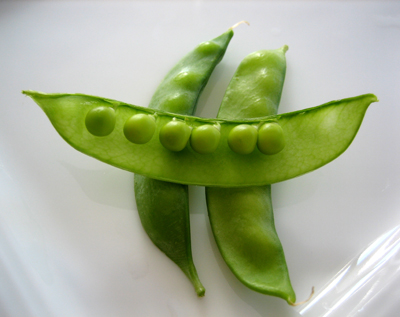
Pea Pod Wine
Ingredients
Age all wines one year or more.
5 pounds pea pods
6 1/2 cups granulated sugar
1 teaspoon yeast nutrients
2 teaspoons acid blend
1/2 teaspoon pectic enzyme
1 campden tablet
1 gallon water, hot
1 package wine yeast
Wash pea pods. Simmer in water until tender. Strain liquid into primary fermentor and squeeze all liquid out of the pulp. Discard pulp. Add water to make up to 1 gallon. Add sugar, nutrients, acid, pectic enzyme and campden tablet. Stir to dissolve sugar. Let sit overnight.
Next day, Specific Gravity should be 1.090 - 1.100. Stir in yeast. Stir daily for 5 to 6 days or until frothing ceases. Siphon into secondary fermentor and place airlock.
For a dry wine, rack in three weeks, and every three months for one year. Bottle.
For a sweet wine, rack at three weeks. Add 1/2 cup sugar dissolved in 1 cup wine. Stir gently, and place back into secondary fermentor. Repeat process every six weeks until fermentation does not restart with the addition of sugar. Rack every three months until one year old. Bottle.
If wine is not clear, or still has quite a bit of sediment forming between rackings, Fine the wine as follows:
Use wine finings or plain gelatin. Gelatin: use 1 teaspoon per 6 gallons of wine. Finings: 1/2 teaspoon per 5 gallons or as per package directions. Soak in 1/2 cup cold water for 1/2 hour. Bring to a boil to dissolve. Cool. Stir into wine. Let sit 10 to 14 days. Rack. If not clear enough yet, repeat process. DO NOT increase amount of gelatin or finings. The mixture will stay suspended in the wine, preventing it from ever clearing. Bottle once wine is clear.
The wine is best if you can refrain from drinking it for one full year from the date it was started.
Wednesday, June 04, 2008
Rice Saki
Use raw rice rather than polished rice, if possible.
Ingredients
2 1/2 pounds rice
1 pound raisins
2 1/2 pounds honey
1 tablespoon acid blend
3/4 teaspoon energizer
1 campden tablet
1 package sherry yeast
water
Wash rice. Place in primary fermentor. Add raisins. Pour 1 gallon hot water into fermentor. Add all other ingredients except yeast. Let sit overnight.
Specific Gravity should be 1.100. Add yeast. Stir daily for 5 to 7 days. Strain out the pulp and put wine into secondary fermentor. Attach airlock. Rack when Specific Gravity reaches 1.020. Rack again when Specific Gravity reaches 1.010. Continue to rack every 3 months for 1 year. This method will yield a dry wine.
For a sweeter wine, add 1/2 cup honey at each racking. Rack every 6 weeks, adding more honey, until fermentation has ceased. Then rack every 3 months for 1 year with no further honey additions.
Bottle the wine when you are sure it is stable.
Ingredients
2 1/2 pounds rice
1 pound raisins
2 1/2 pounds honey
1 tablespoon acid blend
3/4 teaspoon energizer
1 campden tablet
1 package sherry yeast
water
Wash rice. Place in primary fermentor. Add raisins. Pour 1 gallon hot water into fermentor. Add all other ingredients except yeast. Let sit overnight.
Specific Gravity should be 1.100. Add yeast. Stir daily for 5 to 7 days. Strain out the pulp and put wine into secondary fermentor. Attach airlock. Rack when Specific Gravity reaches 1.020. Rack again when Specific Gravity reaches 1.010. Continue to rack every 3 months for 1 year. This method will yield a dry wine.
For a sweeter wine, add 1/2 cup honey at each racking. Rack every 6 weeks, adding more honey, until fermentation has ceased. Then rack every 3 months for 1 year with no further honey additions.
Bottle the wine when you are sure it is stable.
Tuesday, April 15, 2008
Honeysuckle Wine
With Spring almost here (it's still been a little chilly here), the flowers will soon be popping out. What better way to celebrate than to make a batch of wine with the flowers. For this wine make sure that you only use the flowers because the berries are poisonous.
Ingredients
|
Gently rinse the blossoms in cold water. Place in primary fermentor. Add 1 gallon of water and all other ingredients except yeast. Stir to dissolve sugar. Specific Gravity should be between 1.090 and 1.100. Let sit overnight.
The next day, add yeast. Stir daily until frothing stops -- about 3 to 5 days. Strain out blossoms and siphon into secondary fermentor. Attach air lock.
For a dry wine, rack in six weeks, then every three months for one year. Bottle.
For a sweet wine, rack at six weeks. Add 1/2 cup sugar dissolved in 1 cup wine. Stir gently, and place back into secondary fermentor. Repeat process every six weeks until fermentation does not restart with the addition of sugar. Rack every three months until one year old. Bottle.
Bottle the wine when it is 6 to 12 months old. I like to continue racking for a whole year to ensure the wine is as clear as possible. Wine is ready to drink one year after the date the batch was started.
Wednesday, March 26, 2008
Wine Labels The Easy Way

If you happen to stop by my house, you would find that I generally store my wine in gallon jugs. I'm just too darn lazy or getting too old to mess around with filling wine bottles.
Christmas time is a different story. I love to give my better wines away as gifts to friends and family. My problem is that I generally spend hours making the perfect wine label to make my bottles look professional.
This year my problem is solved. At Wine Label Builder you can make a professional looking label in less than a minute.
Not only did I find this as a real time saver but if your making several cases for that special occasion you can have professionally looking labels. Even though Wine Label Builder paid for this review, I found their collection of labels to chose from quite extensive.
Price wise, Wine Label Builder is very reasonable. You can also upload your own custom label and have them print them for you.
So, if your looking for some professional looking labels, give Wine Label Builder a try.

Having too much fun making labels since it was so easy.
Thursday, February 14, 2008
Birch Wine
Soon it will be time for the sap to start moving up the trees. I thought that this would be one that would be kinda' neat to make. Very simple recipe.
1 gallon birch sap
4 1/2 cups granulated sugar
2 oranges or 1 lemon, sliced thin
campden tablets
1 package wine yeast
Place birch sap in primary fermentor. Add sugar. Stir to dissolve. Add oranges or lemon. Let sit overnight.
Next day, Specific Gravity should be 1.090 - 1.100. Stir in yeast. Stir daily for 5 to 6 days or until Specific Gravity is 1.040. Strain out fruit and squeeze as much juice out of it as you can. Siphon into secondary fermentor and add airlock.
For a dry wine, rack in three weeks, and every three months for one year. Bottle.For a sweet wine, rack at three weeks. Add 1/2 cup sugar dissolved in 1 cup wine. Stir gently, and place back into secondary fermentor. Repeat process every six weeks until fermentation does not restart with the addition of sugar. Rack every three months until one year old. Bottle.
The wine is best if you can refrain from drinking it for one full year from the date it was started.TO GATHER YOUR OWN SAP:
To get your birch sap without harming the tree:Harvest in springtime. Cut only one or two low branches per tree, about the thickness of your thumb, with pruning shears. Attach a plastic food container (milk jug, margarine carton, etc) so it can catch the sap as it drips. You can cover the opening of the container with cheesecloth or nylons to keep out debris. Collect your sap daily and store it in the refrigerator until you have enough to make your wine. Add one crushed campden tablet each time you add sap to the refrigerator to kill any wild yeast and vinegar bacteria you may have collected.
Monday, December 31, 2007
Sack Mead
Last in the Series
If you like your meads sweet, light and true to their heritage, you'll love sack mead. The flavor is full of honey, you can almost hear the bees buzz!! Because this mead is only flavored with honey, the tannin is an essential part of the recipe. Leave it out, and you may find the end result a bit insipid.
Makes 1 gallon
3 pounds orange blossom honey
1 teaspoon acid blend
1 teaspoon pectic enzyme
1 Campden tablet
1 package Montrachet yeast
1 teaspoon yeast nutrient
1 1/2 cups orange juice at room temperature
1/4 teaspoon grape tannin
In a large enamel or stainless steel pot, boil the hone in water (1 part honey to 2 parts water) for 10 to 20 minutes, skimming off any foam that forms. (the foam will contain water impurities and beeswax residue.)
Let cool, and then transfer the honey mixture to a 2 gallon fermenter. Add the acid, pectic enzyme and enough water to make 1 gallon. Add the campden tablet and let the mixture sit, well covered, for 24 hours.
In a jar, make a yeast starter culture by combining the yeast, yeast nutrient, and orange juice. Cover, shake vigorously, and let stand 1 to 3 hours, until bubly, then add to must.
Add the tannin and allow the mixture to ferment. We recommend racking meads after the most vigorous fermentation, siphon the wine into a 1-gallon airlocked fermenter. In about 3 months, rack again. In about six months, rack once again. Rack a final time right before bottling--about a year after fermentation started. Then bottle and cork the finished mead and store in a cool cellar.
Age for at least six months before opening a bottle.
Saturday, December 22, 2007
Sweet Wheat Wine
Fifth in the Series
This wine is light and lively with hints of citrus and a nice, vinous character. The wheat supplies nutrients and sugars to enhance the fermenation process.
Makes 1 gallon
3/4 pound wheat berries
1 pound raisins or 1 pint white grape juice concentrate
2 1/2 pounds brown sugar
1 Campden tablet
1 package wine yeast
1 teaspoon pectic enzyme
1 teaspoon yeast nutrient
1 1/2 cups orange juice at room temperature
1 ounce citric acid
Soak the wheat berries overnight in 1/2 quart of water to soften them. Mince the wheat berries and raisins and transfer to a 2 gallon fermenter. Bring 2 quarts of water to a boil, pour it over the wheat-raisin mixture, add the brown sugar, and let cool. Add a Campden tablet and let sit, well covered, for 24 hours.
In a jar, make a yeast starter culture by combining the wine yeast, pectic enzyme, yeast nutrient and orange juice. Cover, shake vigorously, and let stand 1 to 3 hours, until bubly, then add to the must.
Add the citric acid; then let the mixture sit, loosely covered, for ten days, stirring daily. Rack the mixture toa 2 gallon airlocked fermenter and allow it to ferment to completion. When fermeentation stops, bottle, cork and cellar the wine.
Wait at least six months before sampling.
Technorati Tags: Wine, Winemaking, Wheat, Recipe
Subscribe to:
Posts (Atom)